If you need an optician in Qatar, you have three main routes: a private optical shop for a routine sight test and new glasses, a private clinic or hospital ophthalmologist for medical eye problems, or the public system through your PHCC health centre and Hamad Medical Corporation (HMC). This guide explains which one to choose, what a proper eye test should include, how buying glasses and contact lenses works, and what you need for the driving licence eye test.
Where to get an eye test in Doha and across Qatar
The right place depends on why you want the test: routine vision changes suit an optometrist, while pain, sudden vision loss or flashes of light need an ophthalmologist or the emergency department.
Optical shops and optometrists
Most people in Qatar get their routine eye test at an optical shop. Larger optical stores usually have a qualified optometrist and a testing room, and you can often order frames and lenses on the same visit. This is the quickest option if you simply need a new or updated prescription for glasses or contact lenses. Before booking, ask:
- Is the test carried out by a licensed optometrist, not only a sales assistant with an automated machine?
- Is there a fee for the test, or is it included if you buy glasses?
- Will you receive a written copy of your prescription, including your pupillary distance (PD)?
You can compare optical shops by area in our opticians directory.
Ophthalmologists at private clinics and hospitals
An ophthalmologist is a medical doctor who specialises in eyes. They diagnose and treat conditions such as glaucoma, cataracts, diabetic eye disease, infections and injuries, and they perform eye surgery and laser procedures. Many private hospitals and polyclinics in Qatar have an eye department. If your insurance covers specialist consultations, this is usually the faster route for a medical problem. Our guide to hospitals in Qatar compares private and public options.
Public options: PHCC and HMC
If you hold a valid Hamad health card and are registered with a Primary Health Care Corporation (PHCC) health centre, you can use the public eye care pathway:
- PHCC optometry: PHCC provides optometry services for registered patients aged 2 and above, including measuring eyesight and prescribing corrective lenses. According to PHCC, patients need a referral from a PHCC physician or a school health nurse. PHCC also lists extra Saturday morning optometry sessions at Rawdat Al Khail, Muaither and Leabaib health centres. Appointments at health centres can be booked through the PHCC line, 107.
- HMC ophthalmology: HMC runs specialist eye services, with most subspecialties based at the Ambulatory Care Center and further services at Hamad General Hospital, The Cuban Hospital, Al Wakra, Al Khor and other HMC facilities. Non-emergency access is through HMC’s central referral and triage system, so you normally start at your health centre.
The public route is usually cheaper but can mean waiting for non-urgent appointments.
Optical shop vs ophthalmologist: quick comparison
| Situation | Best first stop | Why |
|---|---|---|
| New or updated glasses prescription | Optical shop with an optometrist | Fast, and you can order glasses on the spot |
| First contact lens fitting | Optometrist or ophthalmologist | Lenses need measuring and a follow-up check |
| Driving licence eye test | Traffic-approved provider or driving school | The result must be accepted by the licensing system |
| Diabetes, glaucoma or family history of eye disease | Ophthalmologist | Needs a dilated examination and eye pressure checks |
| Eye injury, chemical splash, sudden loss of vision | Emergency department | Urgent treatment can protect your sight |
| Child’s first eye check | PHCC referral or paediatric eye clinic | Children need age-appropriate testing |
What a proper eye test includes
A quick screen with an automated machine gives an estimate of your prescription, but it is not a full eye examination. A thorough test by an optometrist usually covers:
- History: questions about your symptoms, screen use, general health, medicines and family history of eye disease.
- Visual acuity: reading letters on a chart at distance and near, with and without your current glasses.
- Refraction: the “which is clearer, one or two?” part that fine-tunes your prescription.
- Eye muscle and focusing checks: how your eyes work together, which matters for headaches and eye strain.
- Eye health check: looking at the front of the eye and the retina, and often measuring eye pressure.
- Colour vision: often included, and required for driving licence tests.
If the optometrist spots something unusual, such as raised eye pressure or changes at the back of the eye, they should refer you to an ophthalmologist.
Buying glasses in Qatar
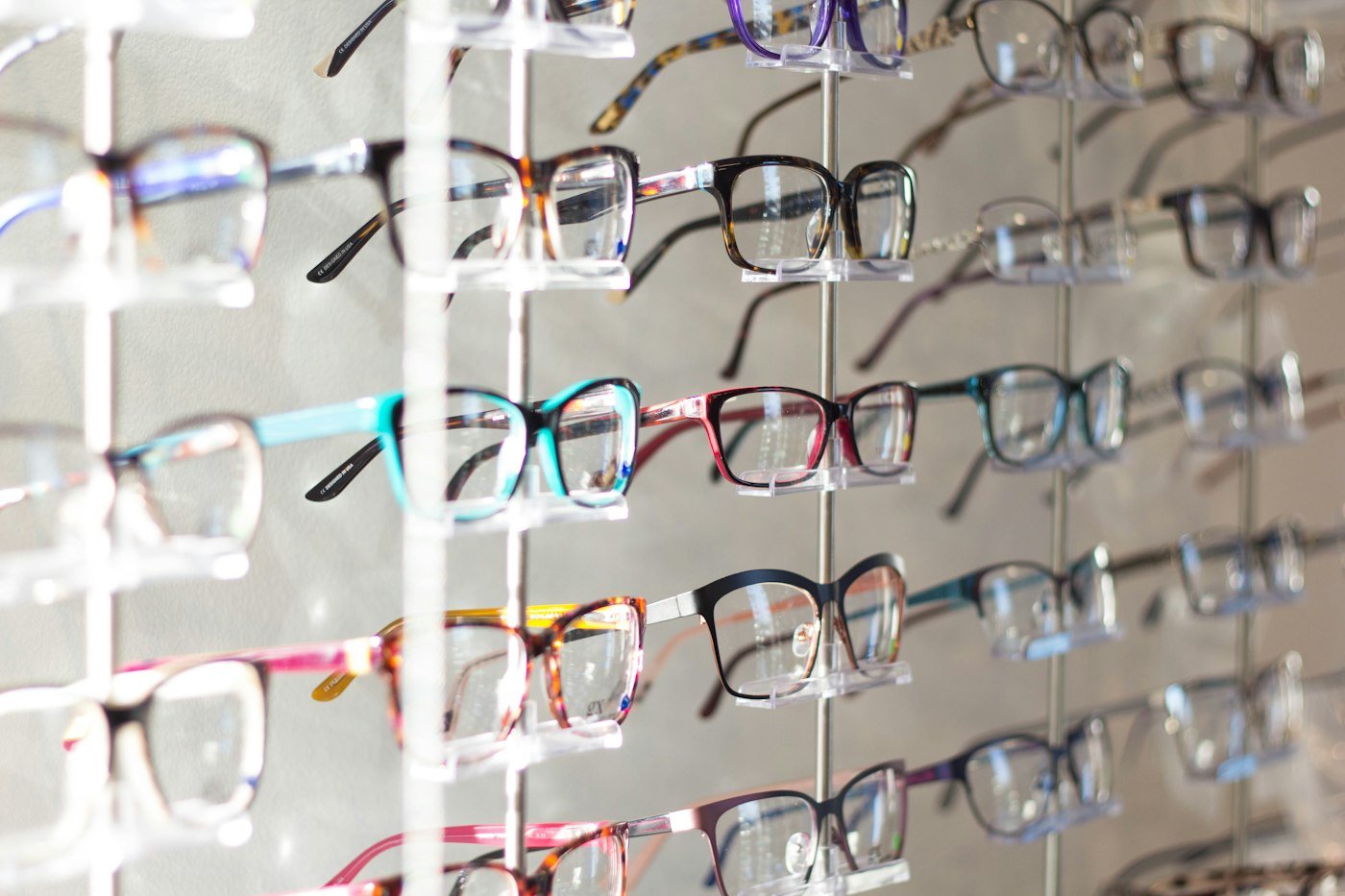
Glasses in Qatar are sold mainly through optical shops, from large chains in malls to smaller independent stores. Prices vary widely with the frame brand and lens type, so ask for a full quote with the lenses included.
Understanding your prescription
Your prescription will show values for each eye (right eye is often written as OD or R, left eye as OS or L): sphere (SPH), cylinder (CYL) and axis for astigmatism, and an addition (ADD) if you need reading help. Always keep a copy, and ask for your PD, which is needed to centre the lenses correctly.
Lens options worth asking about
- Single vision for one distance, or progressive lenses for distance and reading in one pair.
- Anti-reflective coating, useful for night driving and screen work.
- Prescription sunglasses or photochromic lenses, which many drivers find useful given the strong sunlight in Qatar.
Contact lenses in Qatar
Contact lenses sit directly on the eye, so they carry more risk than glasses. Contact lenses are widely available in Qatar from optical shops and online sellers, but a glasses prescription is not the same as a contact lens prescription. A proper contact lens fitting measures the curve and size of your eye and checks how the lens moves, and you should return for a follow-up check.
We could not confirm a specific public rule on whether a prescription is legally required to buy contact lenses in Qatar, so check with the seller and your optometrist. Whatever the rule, the safe approach is the same:
- Get fitted by an optometrist or ophthalmologist before your first pair, and have regular check-ups.
- Buy from a licensed optical shop or reputable retailer, not from market stalls or social media sellers.
- Treat coloured or cosmetic lenses with the same care as prescription lenses, because they can cause the same infections.
- Never sleep, swim or shower in lenses unless your eye care professional has approved it, and never use tap water to clean them.
Contact lens solutions and eye drops are also sold in pharmacies. Our pharmacies guide covers opening hours and what to ask a pharmacist.
Eye test for the driving licence
An eyesight test is part of the driving licence process in Qatar, both for new applicants and at renewal according to renewal guides. The test checks visual acuity and colour vision, and you may wear glasses or contact lenses if you need them. If you do, this can be recorded as a condition on your licence, so always drive with your correction.
What to know at the time of writing:
- Where: many driving schools offer the test, and some optical centres and clinics are approved by the Traffic Department. Results from an authorised provider are entered into the Ministry of Interior licensing system, so check that the place you choose is approved before you pay.
- Cost: resident guides report fees of roughly QR 25 to QR 50. This is not an official fee schedule, so confirm the price with the provider.
- Validity: several guides report that the result is valid for a limited period, commonly given as 30 days, so plan to complete your application soon after the test.
- Recruited drivers: the Ministry of Interior has linked the eye test at Qatar Visa Centres abroad to the traffic licensing system, so expatriates recruited to work as drivers do not need to repeat the test on arrival.
For the full list of documents, fees and steps, see our driving licence in Qatar guide.
Insurance coverage tips
Under Law No. 22 of 2021, health insurance is mandatory for expatriates and visitors in Qatar, and employers must insure their non-Qatari workers through insurers registered with the Ministry of Public Health. However, basic cover is not the same as optical cover. Resident guides note that routine eye tests, glasses and contact lenses are often excluded or subject to a separate limit, while ophthalmologist visits for a medical problem are more likely to be covered.
- Look for an “optical” or “vision” section and any annual limit in your table of benefits.
- Check whether the optical shop or clinic is in your insurer’s network, and whether you pay upfront and claim back.
- Ask whether dependants have the same optical benefit as the main policyholder. Family plans sometimes have a narrower network.
- Keep itemised receipts showing the prescription, frame and lenses separately, as insurers often ask for them.
- If a doctor refers you for a medical eye condition, the consultation may be covered even when glasses are not.
When to see an ophthalmologist
See an ophthalmologist, rather than only an optician, if you have:
- Diabetes or high blood pressure, for regular retinal checks.
- A family history of glaucoma, or raised eye pressure found at an eye test.
- Cloudy or glaring vision that glasses do not fix, which can be a sign of cataract.
- Persistent red eye, eye pain or discharge, especially if you wear contact lenses.
- Double vision, or a squint or lazy eye in a child.
Go to an emergency department straight away for a chemical splash, an eye injury, sudden loss of vision, a curtain or shadow across your vision, or a sudden shower of new floaters and flashes. HMC states that emergency eye services are available 24 hours a day at Hamad General Hospital and The Cuban Hospital. Rinse chemical splashes with plenty of clean water first. To find eye departments near you, browse our listing of hospitals and clinics in Qatar.
Quick checklist
- For routine tests, choose an optical shop with a licensed optometrist.
- For public care, bring your Hamad health card and ask your PHCC doctor for a referral.
- Ask for a written copy of your prescription, including your PD.
- Get a proper fitting and follow-up before wearing contact lenses.
- For the driving licence, confirm the provider is Traffic Department approved and check the fee.
- Check your insurance for optical limits and network providers before you buy.
- See an ophthalmologist for medical symptoms, and go to emergency for injuries or sudden vision loss.
Ready to book? Browse opticians in Qatar to find optical shops near your home or office.
Frequently asked questions
Where can I get an eye test in Doha?
For routine tests, most people use an optical shop with an in-store optometrist. For medical problems, see an ophthalmologist at a clinic or hospital, or ask your PHCC health centre for a referral.
Can I get a free eye test through the public system?
PHCC offers optometry to registered patients aged 2 and above, but you need a referral from a PHCC physician or school health nurse. Costs depend on your status and health card, so check with your health centre.
How much does the driving licence eye test cost in Qatar?
Resident guides report fees of roughly QR 25 to QR 50 at driving schools and approved centres at the time of writing. Confirm the price and that the provider is Traffic Department approved.
Can I use my glasses prescription to buy contact lenses?
No. A glasses prescription does not include the measurements needed for contact lenses. Book a contact lens fitting with an optometrist or ophthalmologist before buying lenses for the first time.
Does health insurance in Qatar cover glasses?
It depends on your policy. Mandatory basic cover often excludes routine eye tests, glasses and contact lenses, while some employer plans include an optical allowance. Check your table of benefits and ask your insurer or HR team.