If you need a 24 hour pharmacy in Qatar, the quickest official route is the Ministry of Public Health (MoPH) pharmacy finder on Hukoomi, which lists pharmacies with their location, phone number and whether they open 24/7. Several large pharmacy chains also run round-the-clock branches in Doha, and delivery apps can bring non-prescription items to your door at any hour. This guide covers how to find an open pharmacy, the prescription rules, what travellers need before bringing medicine into Qatar, and how to pay using a health card or insurance.
How to find a 24 hour pharmacy in Qatar
Searching “pharmacy near me Doha” on a map app will show plenty of results, but opening hours on maps are not always accurate. These sources are more reliable:
- Hukoomi / MoPH pharmacy finder: the government’s “Find Pharmacy in Qatar” service on hukoomi.gov.qa gives the phone number, location and map directions for each licensed pharmacy, including those operating 24/7.
- Pharmacy chain websites and apps: the larger chains in Qatar, such as Sunlife and Kulud, operate some branches around the clock. Check the chain’s own branch list for current hours before you set off.
- Our directory: you can browse pharmacies in Qatar by area and call ahead to confirm they are open.
Hospital and health centre pharmacies
Government health centre and hospital pharmacies mainly dispense to patients who have been seen by their own doctors. They are not general walk-in shops. That said, if you need urgent treatment at night, Primary Health Care Corporation (PHCC) runs 24-hour urgent care at a number of health centres. According to PHCC’s list reported in March 2026, centres offering 24-hour urgent care for adults and children included Al Ruwais, Al Mashaf, Al Wajbah, Umm Slal, Al Saad, Al Thumama, Muaither and Leabaib, with further adult-only urgent care at Gharrafat Al Rayyan, Al Kaaban, Al Sheehaniya, Al Karaana, Abu Baker Al Siddiq and Rawdat Al Khail. The list may change, so check the PHCC website or the Nar’aakom app before you go.
For anything serious, go to an emergency department or call 999. You can find emergency departments and private hospitals in our hospitals in Qatar listings.
Prescription rules in Qatar
Qatar separates medicines into those you can buy over the counter and those a pharmacist may only dispense against a valid prescription. The broad picture:
- Usually available without a prescription: common painkillers such as paracetamol, cough and cold remedies, antacids, antihistamines for allergies, rehydration salts, vitamins and many skin and first aid products.
- Prescription only: antibiotics, most heart, blood pressure and diabetes medicines, strong painkillers and the majority of long-term treatments. PHCC has repeatedly warned against taking antibiotics without a prescription from a healthcare professional.
- Controlled medicines: narcotic and psychotropic medicines (for example some strong painkillers, sedatives, sleeping tablets and certain medicines used in mental health care) are tightly regulated and only dispensed under strict controls.
Can I use a foreign prescription?
In general, no. Pharmacists in Qatar are typically unable to dispense against a prescription issued abroad. If you run out of a medicine, book an appointment with a doctor licensed in Qatar, who can review your treatment and issue a local prescription. MoPH guidance for travellers says the same: when your supply runs out, you should consult a locally licensed doctor, and if continued treatment is approved a medical file is opened so the medicine can be prescribed and dispensed in Qatar.
Bringing medicine into Qatar: rules for travellers
Most everyday medicines for personal use cause no problems at Hamad International Airport if they are in their original packaging and you carry the prescription. Controlled medicines are a different matter, and the rules were updated in August 2026.
The MoPH electronic permit for controlled medicines
In August 2026 MoPH launched an electronic permit system at fli.moph.gov.qa for travellers arriving in or departing from Qatar with controlled medicines for personal use. Key points reported at the time of writing:
- MoPH published a list of 140 controlled medicines: 61 on the Allowed Narcotic List and 79 on the Allowed Psychotropic List. The list is in the guidance booklet on the permit website.
- Narcotic medicines are limited to a maximum of 10 days of prescribed treatment. Psychotropic medicines are limited to up to 60 days.
- MoPH advises applying at least five working days before travel. Applications are decided within three working days once all requirements are met.
- Access is through the National Authentication System via the MoPH website.
- Medicines that are banned internationally or locally, including substances in the relevant schedules of Law No. 9 of 1987, cannot be brought in at all.
If you arrive without prior approval, you must declare narcotic or psychotropic medicines on arrival and be ready to show a valid prescription and medical report.
Documents to carry
- A prescription in English or Arabic showing your full name, the medicine name, dosage, treatment duration, issue date, and the doctor’s name, signature and stamp.
- A medical report in English or Arabic with your diagnosis and treatment plan. The MoPH guidance booklet also mentions Ministry of Foreign Affairs attestation for the medical report.
- Both documents issued within the last six months by a recognised healthcare facility, with a contact number for the overseas doctor or clinic.
- A copy of your passport or Qatar ID.
- A signed undertaking that the medicine is for your personal use only.
Keep medicines in their original, labelled packs in your hand luggage, and carry original documents rather than photos. Injectable medicines need approval and supervision from a local healthcare facility.
Medicine delivery apps and services
Home delivery is widely used in Qatar, both for over-the-counter items and repeat prescriptions.
- Delivery apps: Talabat and Snoonu both have pharmacy sections that deliver medicines, vitamins and personal care products from partner pharmacies across Qatar, with Talabat advertising 24-hour pharmacy delivery. These are best for non-prescription items.
- Chain pharmacy websites: several chains let you order online and upload a prescription, which the pharmacist checks before dispensing.
- PHCC Medication Home Delivery Service: patients registered at PHCC health centres can send a WhatsApp message to their health centre pharmacy, after which a pharmacist calls back. Qatar Post delivers, usually within two working days. PHCC lists the fee as QR 30, paid online by card, and requires a valid health card and a home address matching your blue plate registration. Narcotic and controlled medicines are not delivered and must be collected in person.
- Hamad Medical Corporation (HMC): HMC has run a medicine home delivery service with Qatar Post for its patients. Check the current booking process by calling 16000.
Medicine prices and MoPH pricing
Medicine prices in Qatar are regulated. MoPH says prices are determined when a medicine is registered for the local market, based on approved pricing rules, and academic reviews of Qatar’s system describe a uniform mark-up applied to private-sector medicines. In practice this means the same registered prescription medicine should not vary wildly in price from one pharmacy to the next.
MoPH also revises prices periodically. In August 2025 it announced reductions of between 15% and 75% on 1,019 pharmaceutical products, including medicines for heart disease, high blood pressure, diabetes and cancer. Prices may change again, so if a price looks wrong, ask the pharmacist to check it against the current registered price.
Using a PHCC health card or insurance
| How you are covered | Where you get medicines | What to expect |
|---|---|---|
| PHCC or HMC health card | Pharmacy at your health centre or HMC facility, or home delivery | Medicines prescribed by your government doctor are dispensed there. The card does not work as payment at private pharmacies. |
| Private health insurance (often through an employer) | Network pharmacies, usually attached to or approved by your insurer | Show your insurance card and prescription. Co-payments and covered medicines depend on your policy. |
| Visitor health insurance | Mainly hospitals for emergencies | The mandatory visitor policy is built around emergency treatment, so routine pharmacy purchases are usually paid out of pocket. |
| No cover | Any licensed pharmacy | You pay the regulated retail price. |
The PHCC Nar’aakom app lets you track your health card’s expiry, renew it online, book appointments and manage family members’ accounts, which makes it easier to get a repeat prescription in time. If you use private insurance, ask your insurer or HR team for the list of network pharmacies and check whether prescriptions from a specific clinic need pre-approval.
What pharmacists in Qatar can help with
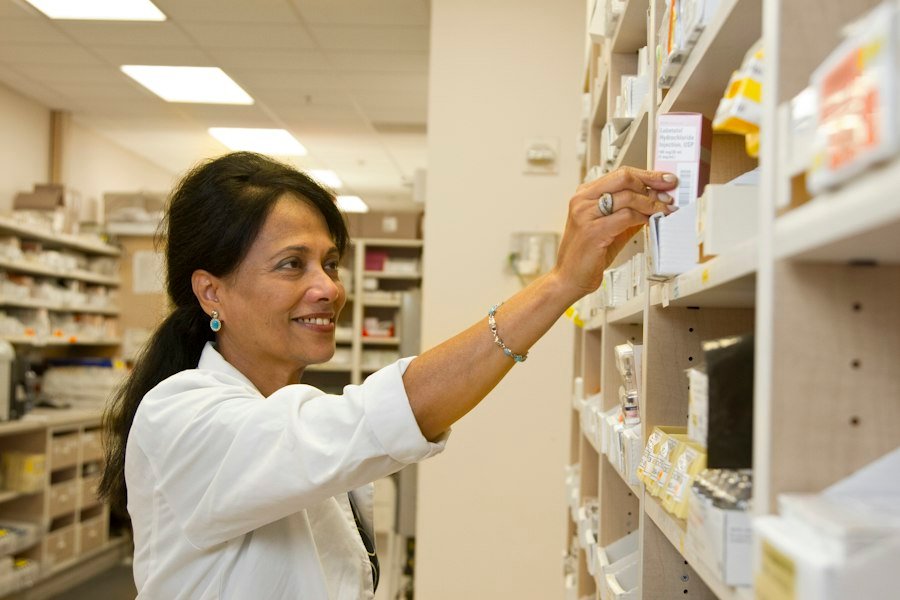
Pharmacists are licensed by MoPH and are a useful first stop for minor problems. They can:
- recommend over-the-counter treatment for colds, mild pain, allergies, heartburn, minor skin problems and similar complaints;
- explain how and when to take a medicine, possible side effects and interactions with other medicines you take;
- suggest a registered generic alternative if a branded product is out of stock;
- advise when you need to see a doctor, a dentist or go to emergency instead.
They cannot prescribe antibiotics or other prescription-only medicines, and they cannot dispense on a foreign prescription. For tooth pain that does not settle with simple painkillers, see a dentist: our dental clinics in Qatar listings can help you find one nearby.
Safety tips
- Buy medicines only from licensed pharmacies or their official apps. MoPH has warned that bans on unlicensed products apply to every channel, including social media and electronic platforms.
- Be wary of products sold online as “for research purposes” or “not for human use”. In August 2026 MoPH banned the sale and use of unlicensed peptide products such as BPC-157, MOTS-c and retatrutide.
- Do not share prescription medicines, and do not keep leftover antibiotics for later.
- Tell the pharmacist about any allergies, pregnancy, breastfeeding and other medicines you take.
- Check expiry dates and that the pack is sealed and labelled, especially for deliveries.
Quick checklist
- Save the Hukoomi pharmacy finder and one or two nearby 24-hour pharmacies in your phone.
- Know your nearest 24-hour PHCC urgent care centre and the emergency number, 999.
- Keep your health card or insurance card valid and with you.
- Get a local prescription before your supply of a regular medicine runs out.
- Travelling with controlled medicines? Apply for the MoPH permit at least five working days before travel.
- Carry prescriptions and medical reports in English or Arabic, issued within six months.
- Use licensed pharmacies and official apps only.
Ready to find one near you? Browse the pharmacies category in our directory, or search the full Qatar business directory for clinics, hospitals and other healthcare providers.
Frequently asked questions
How do I find a 24 hour pharmacy in Qatar?
Use the MoPH “Find Pharmacy in Qatar” service on Hukoomi, which shows pharmacies operating 24/7, or check the branch lists of the large chains. Call ahead to confirm the branch is open and has your medicine in stock.
Can I buy antibiotics without a prescription in Qatar?
No. Antibiotics should only be dispensed with a prescription from a licensed healthcare professional. See a doctor at a PHCC health centre, a private clinic or urgent care if you think you need them.
Do I need a permit to bring medicine into Qatar?
For ordinary personal medicines in original packs with a prescription, you generally do not. For controlled narcotic or psychotropic medicines, MoPH asks travellers to apply for an electronic permit at fli.moph.gov.qa at least five working days before travel. Limits at the time of writing are 10 days’ supply for narcotics and 60 days for psychotropics.
Will a pharmacy in Qatar accept my prescription from home?
Usually not. Foreign prescriptions are generally not dispensed. You will need to see a doctor licensed in Qatar, who can issue a local prescription if the treatment is appropriate.
Can I use my PHCC health card at a private pharmacy?
No. The health card covers medicines prescribed and dispensed through government facilities such as PHCC health centres and HMC. At private pharmacies you pay yourself or use private insurance if the pharmacy is in your insurer’s network.