

Katara Mosque, Doha
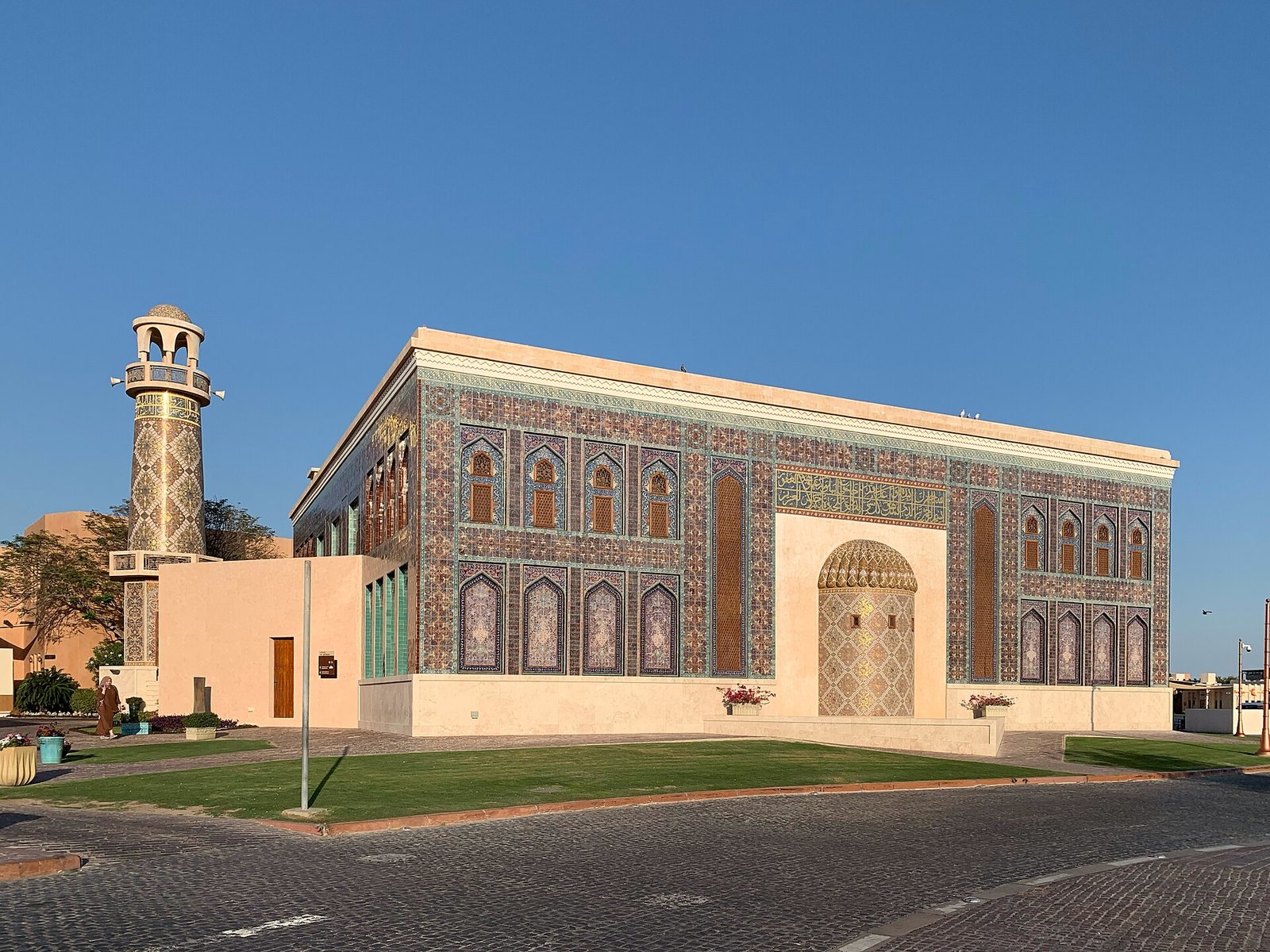
Known as the Blue Mosque, this mosque in Katara Cultural Village is covered in turquoise, violet and blue mosaic tiles with gold calligraphy.
Katara, Doha
Overview
Katara Mosque, often called the Blue Mosque, is one of the most photographed buildings in Katara Cultural Village. It opened in 2010 and was designed by the Turkish designer Zeynep Fadıllıoğlu. The outside is covered in glittering turquoise, violet and deep blue mosaic tiles, with gold calligraphy panels. It is an active mosque, and it sits close to the village's amphitheatre and main walkways.
Go for the tilework, the calm courtyard and the chance to learn about Islam in a relaxed setting. Non-Muslim visitors are welcome to look around outside prayer times. Guides from the Qatar Guest Centre are often at the entrance to answer questions. Katara itself is free to enter, so the mosque is an easy addition to a walk through the galleries, beach and restaurants of the village.
History and background
Katara Mosque was built as part of Katara Cultural Village, the arts and heritage district that opened on Doha's coast in 2010. It was designed by Zeynep Fadıllıoğlu, a Turkish designer best known for the interior of the Şakirin Mosque in Istanbul and often described as a pioneer among women designing mosques.
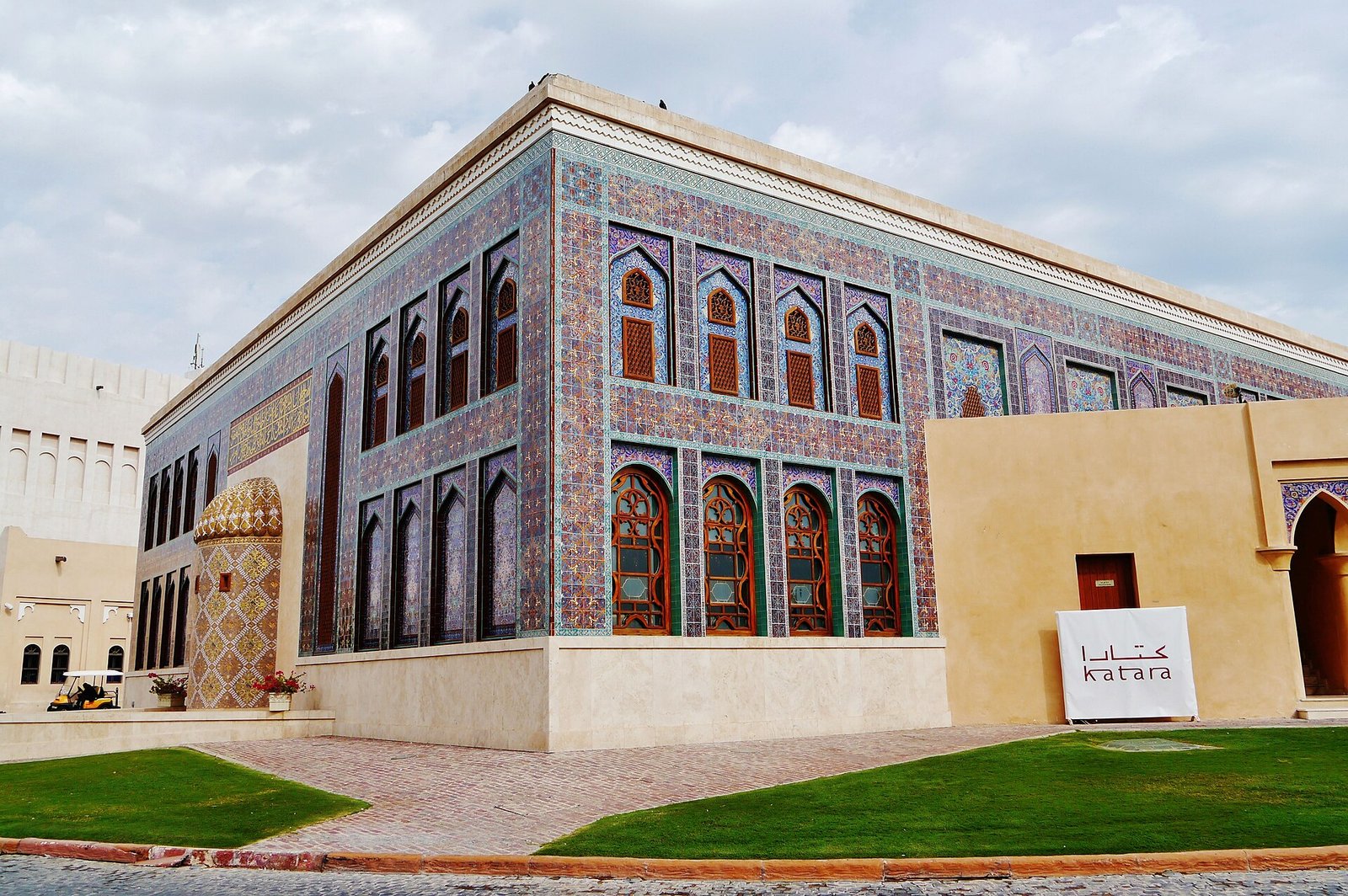
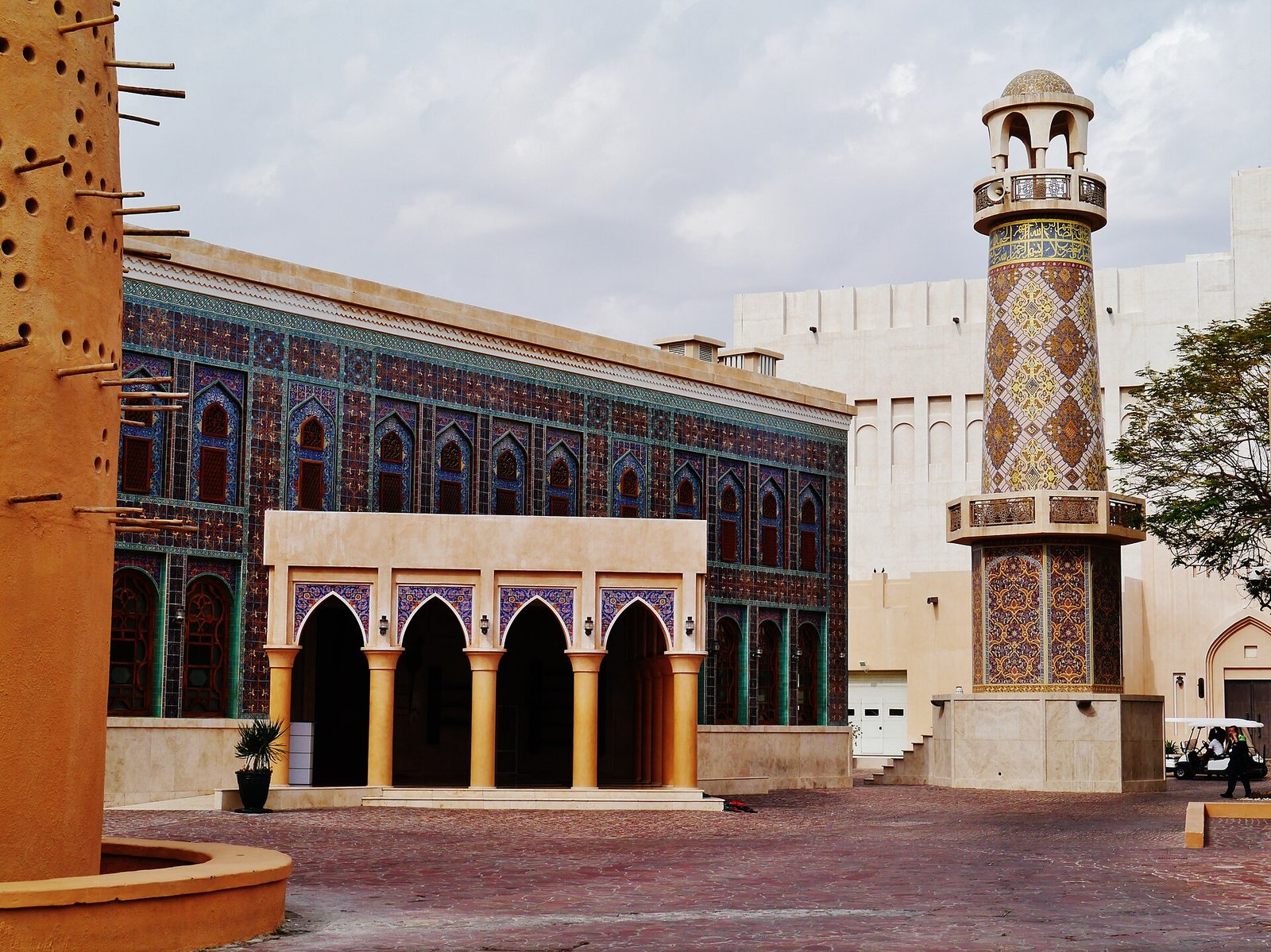
The design draws on Ottoman, Persian and Central Asian traditions. The building has nine domes and one minaret. Its outer walls are clad in turquoise, violet and blue glass mosaics, framed by calligraphic panels of Qur'anic verses finished in gold leaf. Craftsmen with restoration experience from Istanbul's Dolmabahçe Palace worked on the decoration.
Today it serves as a working mosque for the village and as a place where visitors from abroad can learn about Islam. The smaller Golden Mosque, clad in gold-coloured tiles, stands elsewhere in Katara.
What to see at Katara Mosque
The mosaic façade
The outer walls shimmer with turquoise, violet and deep blue tiles. Up close you can see the detail of the geometric patterns and how they catch the changing light.
Gold calligraphy panels
Qur'anic verses in gilded calligraphy frame the façade. They are some of the finest decorative details anywhere in Katara and reward a slow, careful look.
Domes and minaret
Nine domes cluster over the prayer hall, beside a single minaret. Step back towards the amphitheatre if you want to fit the whole building into one photo.
Meeting the Qatar Guest Centre
Staff and volunteers from the Qatar Guest Centre often welcome non-Muslim visitors at the entrance. They answer questions about the mosque, prayer and Islam, and can advise when it is fine to go inside.
The Golden Mosque
A short walk away, Katara's smaller Golden Mosque is covered in gold-coloured tiles that glint in the sun. Seeing both mosques makes a good contrast in style.
Katara Cultural Village
The mosque is surrounded by galleries, the amphitheatre, pigeon towers, restaurants and a public beach, all within easy walking distance of each other and the mosque.
How to get to Katara Mosque
Tips for your visit
- Avoid prayer times, especially Friday midday prayers, if you want to go inside.
- Women should bring a scarf to cover their hair; everyone should cover arms and legs.
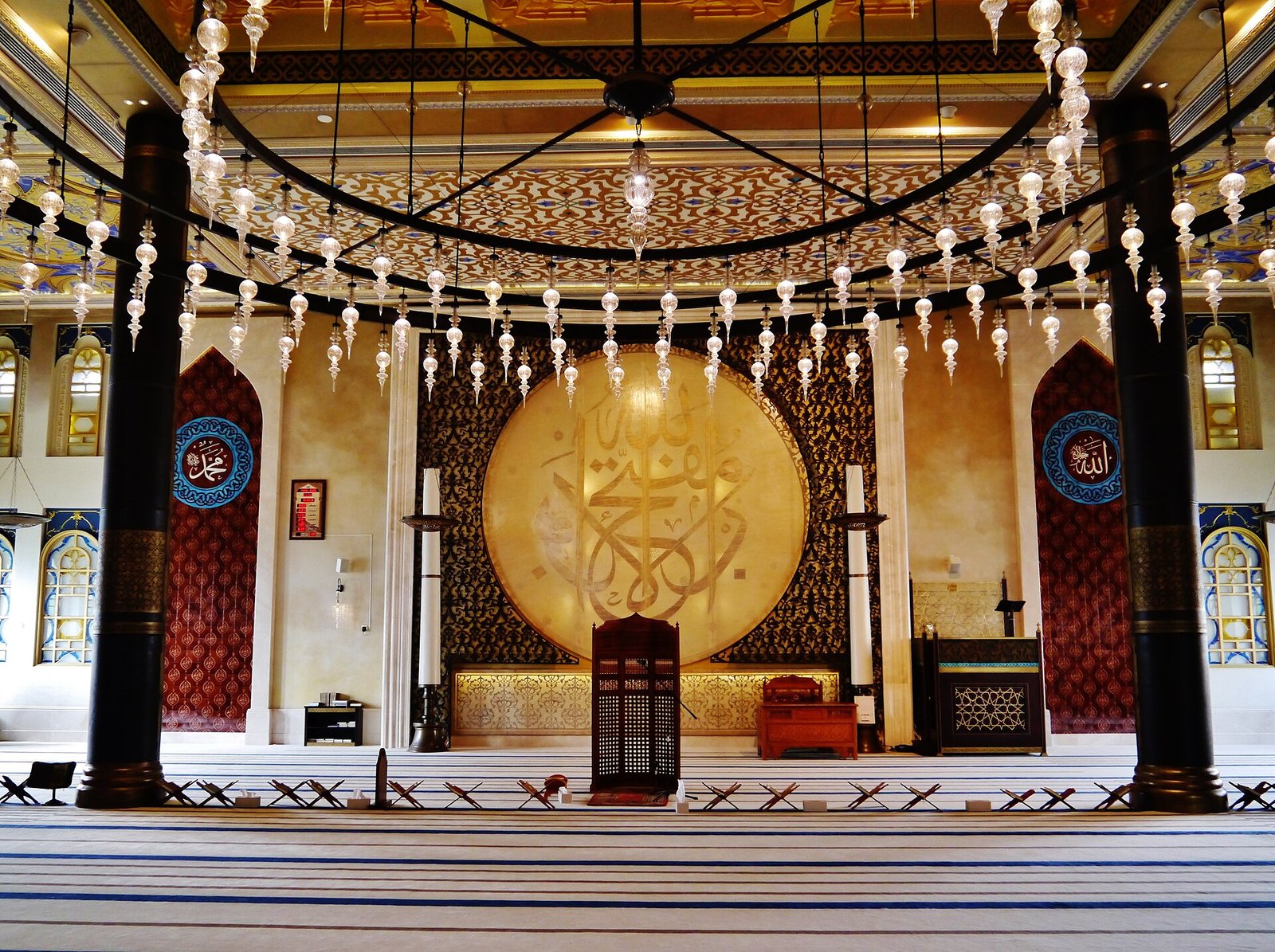
- Take your shoes off before entering the prayer hall.
- Ask before photographing people who are praying.
- Late afternoon light shows the colours of the tiles best.
- Combine the visit with the Golden Mosque and a walk through Katara.
Facilities
Frequently asked questions
Can non-Muslims visit Katara Mosque?
Yes. Non-Muslim visitors are welcome outside prayer times. Staff from the Qatar Guest Centre are often at the entrance to greet visitors, answer questions and let people in after prayers. Dress modestly, remove your shoes and be quiet and respectful inside.
Why is Katara Mosque called the Blue Mosque?
It gets the name from its exterior, which is covered in turquoise, violet and deep blue mosaic tiles. Gold calligraphy panels add contrast. The colours make it one of the most photographed buildings in Katara Cultural Village.
Who designed Katara Mosque?
The mosque was designed by Turkish designer Zeynep Fadıllıoğlu, who is known for mosque interiors including the Şakirin Mosque in Istanbul. It opened in 2010 as part of Katara Cultural Village.
What should I wear to Katara Mosque?
Wear loose clothing that covers your arms and legs. Women should cover their hair, so bring a scarf. Shoes are removed before entering the prayer hall. The same modest dress also suits the rest of Katara Cultural Village.
Is there an entry fee for Katara Mosque?
No. Both the mosque and Katara Cultural Village are free to enter. You may only pay for parking in some areas, for food, or for tickets to specific events held in the village.
Last checked September 2026. Hours and prices can change, so confirm on the official website before you go.
More places nearby
See all 32 places
Own a business near Katara Mosque?
List it free on Companies in Qatar and get found by visitors and residents searching nearby.