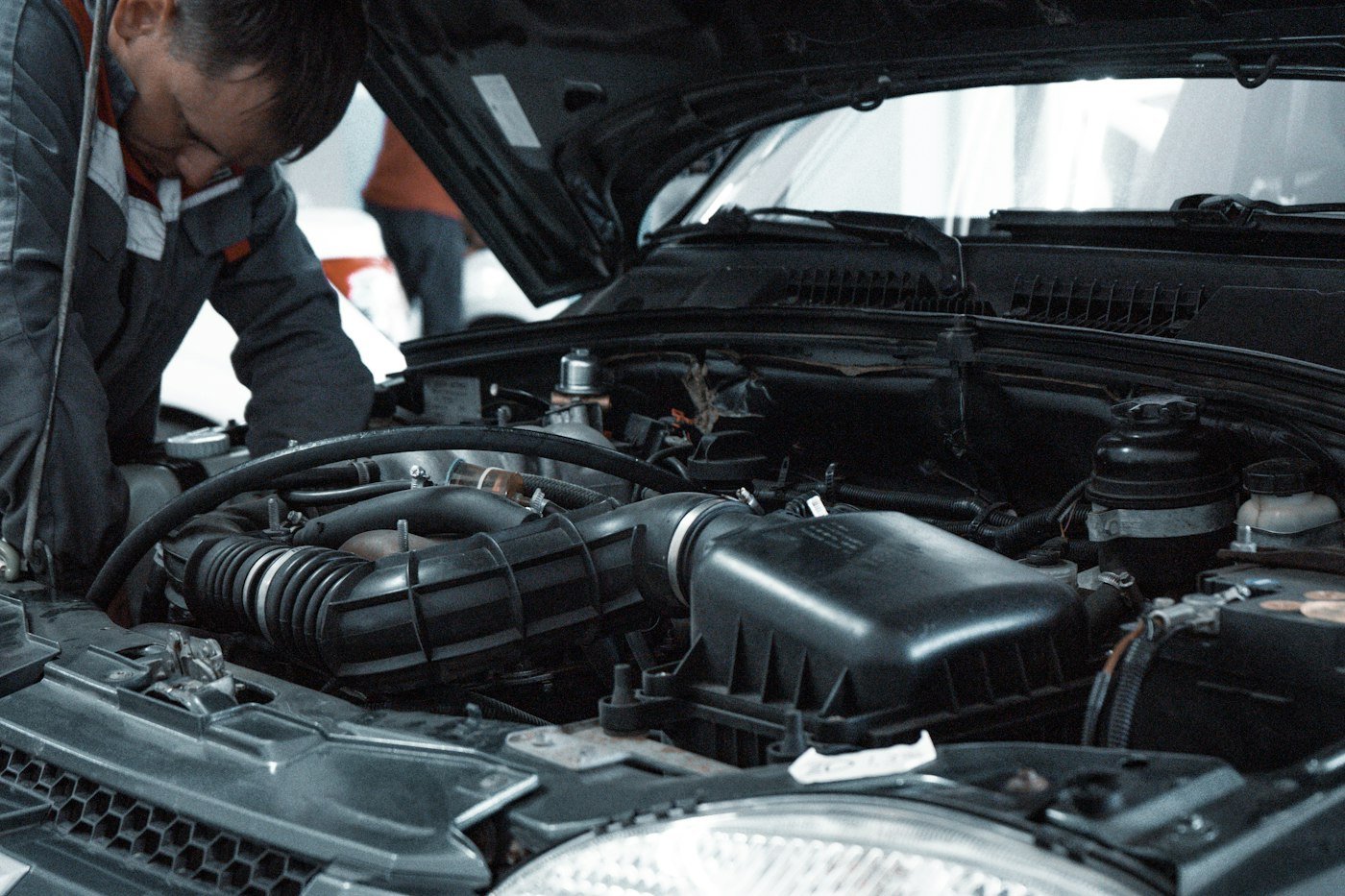
Keeping a car reliable in Qatar’s heat comes down to a handful of habits: test the battery before summer, check tyre pressure cold and know how old your tyres are, keep the cooling system and AC serviced, and protect the car from sun and dust. Heat does most of its damage quietly between June and September, so the best time to prepare is in the cooler months. This guide gives you a check schedule, what to keep in the car, and how to decide between an independent garage and the dealer.
Why Qatar’s climate is hard on cars
The Qatar Meteorology Department (QMD) describes June as the first month of summer and only the third hottest month of the year in Doha, with an average daily temperature of 34.7°C and a record high of 49.1°C set in 2010, according to The Peninsula’s report of the QMD outlook. July and August are hotter still. QMD also notes that fresh to strong northwesterly winds are common in June and can cause blowing dust and reduced visibility.
Heat speeds up wear on batteries, rubber and fluids, while fine dust gets into filters, AC systems and paintwork. A car left in an open car park all day faces both.
Batteries: the part heat kills first
Battery maker VARTA explains that heat accelerates the internal ageing of a car battery, mainly through corrosion of the lead grid inside it. In a test on taxis in Dubai, VARTA recorded battery temperatures above 60°C for most of the time the cars were running. The damage builds up over summer but often only shows later, when a weakened battery finally fails to start the car.
- Get it tested, not just jump-started. Ask for a battery test whenever the car is in for a service, and definitely before June.
- Know its age. Many batteries have a date on the label or casing. If yours is from before the last summer and has started cranking slowly, plan a replacement rather than waiting for it to die in a car park.
- Ask about battery type. VARTA says AGM batteries hold up better than conventional ones in hot climates. Whether one suits your car depends on the model, so check with a garage.
- Avoid endless short trips. Lots of five-minute drives never let the battery recharge fully.
Tyres: pressure, age and what Qatar’s rules say
Check pressure cold, against the right number
Michelin advises checking pressure when the tyres are cold, meaning before you drive or at least three hours after, because driving heats them and raises the reading. The correct figure is the one from your car’s manufacturer, on the sticker in the driver’s door frame, inside the fuel filler flap or in the owner’s manual. The number on the tyre sidewall is the maximum pressure, not the target. Michelin suggests checking all tyres, including the spare, once a month and before a long trip.
In practice, check early in the morning, not after an hour’s drive. Never let air out of a hot tyre just because the reading looks high; it will be underinflated once it cools.
Read the date code
Every tyre carries a DOT code on the sidewall ending in four digits. As Michelin Middle East explains, the first two digits are the week and the last two are the year of manufacture, so 4724 would mean week 47 of 2024. Check this on your current tyres and on any new ones before they are fitted.
Tyre age rules for buyers in Qatar
Qatar regulates how old tyres can be when they are sold. The Ministry of Commerce and Industry has set a maximum of 24 months from production for tyres for cars, buses and light trucks, and The Peninsula reported in 2017 that tyre warranties were extended to one year from the date of sale. In June 2026, Gulf Times reported that under Ministerial Decision No. 35 of 2026, approved companies that meet storage and technical requirements can sell tyres for an additional six months, with the warranty on those tyres extended to one year and three months. Because the rules have changed over time, the simple approach is to check the date code, ask what warranty applies and make sure it is written on your invoice.
Look, don’t just measure
Every week or so, look for bulges, cracks in the sidewall, uneven wear and embedded stones or nails. Any sidewall cracking is a reason to get the tyre inspected before a long drive.
Cooling system and air conditioning
The engine cooling system is doing its hardest work when you are crawling through traffic on a peak summer afternoon with the AC on full. Before summer:
- Check the coolant level in the expansion tank with the engine cold. Never open a hot radiator cap.
- Use the coolant type your manual specifies, and have it replaced at the interval it gives. Topping up with plain water is a short-term fix, not a solution.
- Ask the garage to inspect hoses, the radiator and the cooling fan.
- Replace the cabin air filter. In dusty conditions it clogs faster and weakens airflow.
- If the AC takes longer to cool or blows warm air at idle, have it checked for leaks or compressor problems before the peak months, when garages are busiest.
Watch the temperature gauge. If it climbs towards hot, switch off the AC, pull over safely when you can, and let the engine idle or cool rather than pushing on.
Engine oil and other fluids
Follow the manufacturer’s service schedule, and check whether your handbook has a separate schedule for severe or dusty operating conditions. If it does, ask your garage whether your driving fits it, since that can mean shorter intervals. Between services, check the oil level every few weeks with the car on level ground, and ask the garage to look at brake fluid, transmission fluid and, where fitted, power steering fluid at each visit.
Sun and dust: protecting paint, glass and interior
- Shade first. Covered parking, a carport or even an afternoon shadow line makes a real difference to cabin temperature and dashboard wear.
- Use a windscreen sunshade whenever you park outdoors.
- Wash dust off rather than wiping it dry. Dry-wiping drags grit across the paint. Regular washing and a protective wax or sealant help the clear coat.
- Replace wiper blades once they smear or chatter. Rubber hardens quickly in the sun.
- Change the engine air filter as scheduled, or sooner after heavy dust.
- Condition leather seats so they do not crack.
What to keep in the car, and what to take out
The Ministry of Interior’s summer guidance, reported by The Peninsula in June 2026, asks drivers not to leave mobile phones, power banks or other electronic devices, lighters, perfumes, hand sanitisers or other flammable items in parked cars, and to avoid unsafe modifications to the car’s electrical system.
Things worth keeping in the car year round:
- Drinking water (replace it regularly rather than leaving the same bottles baking for months)
- A tyre pressure gauge
- A working spare or repair kit, plus the jack and wheel brace
- Jump leads or a jump starter, kept out of direct sun
- A torch, a basic first aid kit and a warning triangle
- A sunshade and a microfibre cloth
A practical check schedule
| When | What to check |
|---|---|
| Every week | Walk-round look at tyres, lights and fluid leaks under the car; watch the temperature gauge and warning lights |
| Every month | Tyre pressures (cold, including the spare), oil level, coolant level, washer fluid |
| Before a long drive | Tyre pressures and condition, coolant, oil, water on board, phone charged |
| March to May | Pre-summer service: battery test, AC check, cabin filter, coolant and hoses, wiper blades |
| October to November | Post-summer check: battery again, tyre sidewalls, air filter after the dusty months |
| Every service | Follow the manufacturer’s schedule and keep every receipt |
Three Qatar scenarios
Parked in an open car park all day in August
Use a sunshade and take electronics and anything flammable with you. When you return, open the doors for a minute before getting in, start the car, and let the AC run on fresh air briefly before switching to recirculate. If the car hesitates to start on a hot afternoon, treat it as an early warning about the battery rather than bad luck.
A long drive to Sealine or the south
The Ministry of Interior has advised people heading off on road trips to inspect tyres, the engine cooling system and electrical wiring to avoid breakdowns, as reported in August 2026. Check pressures cold before you leave, fill up before the stretch south of the city, carry plenty of water and tell someone your plans. Driving onto sand needs the right vehicle and experience; don’t try it alone in a standard car.
Caught in a dust storm
Slow down, leave a much bigger gap to the car in front, use your dipped headlights and avoid overtaking. The Ministry of Interior has advised drivers not to drive with hazard lights on in poor visibility, since it confuses other drivers. Switch the AC to recirculate. If visibility becomes too poor to continue, pull well off the road somewhere safe. Afterwards, get the air filter and cabin filter checked and wash the car properly.
When to get it to a garage
Don’t wait for the next service if you notice any of these:
- The temperature gauge rising above its normal position, or steam from the bonnet
- Slow cranking, a battery warning light or dimming lights at idle
- AC that cools poorly, cycles on and off, or smells musty
- Coolant, oil or other fluid under the car
- A tyre that keeps losing pressure, or any bulge or deep crack
- A burning or electrical smell
You can compare workshops near you in our directory of car repair and garages in Qatar. Ask for a written quote before work starts and for the old parts back if you want to see what was replaced.
Independent garage or dealer? Warranty servicing in Qatar
Many new arrivals are told that servicing anywhere but the dealer will void their warranty. Qatar’s regulator has pushed back on that. In 2015 the Ministry of Economy and Commerce told dealers to let owners choose where maintenance is done. In 2016, Gulf Times reported that 22 distributors agreed not to restrict warranty cover to servicing at their own workshops, provided customers keep receipts, and that parts used should be accredited by the manufacturer and match the original specifications. Dealers were also expected to prove a violation before rejecting a claim.
In practice:
- Dealer: manufacturer-trained technicians, genuine parts and software updates, and fewer arguments if a warranty claim comes up. Usually the simplest choice while a car is under warranty.
- Independent garage: often more flexible and competitive, especially for older cars. Choose one that follows the manufacturer’s schedule and uses approved parts.
- Either way: keep every invoice showing the date, mileage, work done and parts used. Read your warranty booklet so you know what it requires. If a dealer refuses a claim you think is valid, the Ministry of Commerce and Industry’s consumer protection line is 16001.
Servicing is separate from the annual technical inspection needed to renew your Istimara. For that, see our guide to Fahes vehicle inspection, and if you are shopping for a car, our guide to buying a used car in Qatar covers the checks to make first.
Common mistakes
- Checking tyre pressure after a drive and letting air out of hot tyres
- Trusting the sidewall number instead of the door sticker
- Buying cheap tyres without checking the date code
- Waiting for the battery to fail instead of testing it before summer
- Topping up coolant with water for months on end
- Leaving power banks, lighters and perfume in the car
- Throwing away service receipts
For more practical guides to life in Qatar, browse our Qatar guides.